

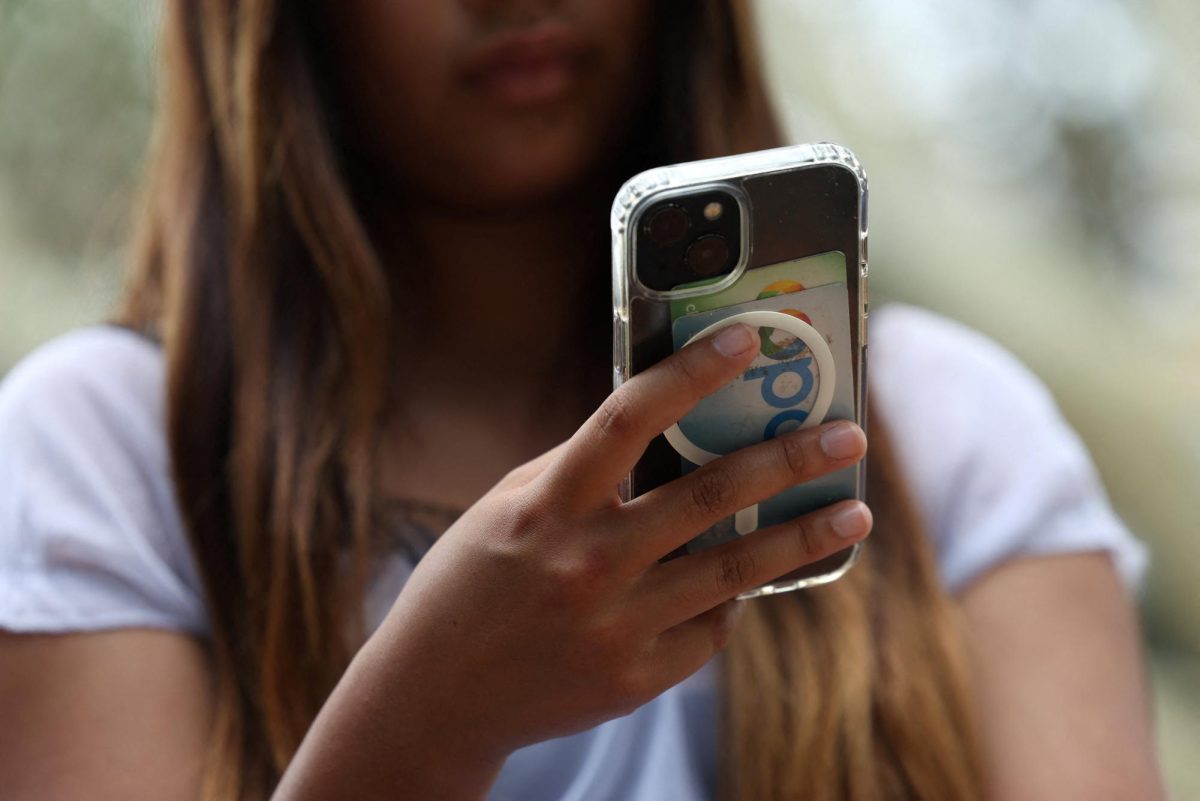
If Indiana lawmakers get what they want, students won’t be able to have their phones at school next year. Air pods, smart watches, and personal laptops would also be prohibited on school grounds.
Current state legislation being debated for the 2026 year includes House Bill 1034, which is aiming to affect use of personal devices in schools; the same case is working its way through the senate as Senate Bill 78. Laws restricting cell phone use in the classroom were already put in effect in 2024 when Senate Enrolled Act 185 was passed, banning cell phone use during instructional time. But HB 1034 aims to be stricter for the upcoming school year.
HB 1034 was introduced to the House Committee on December 1st, 2025, and discusses banning the use of cellphones. Legislatures want to set a policy that “(1) prohibits a student from using or possessing a wireless communication device during the school day; (2) requires teacher directed use of a wireless communication device for educational purposes to occur only on school supplied wireless communication devices; and (3) mandates the use of a no device policy or a secure storage policy,” according to the Indiana General Assembly website.
So either schools will have to ban students from having cellphones in the building completely, or they will have to implement a set-up where students will be able to keep their phones on their person, but their access will be restricted. An option for the latter case is having a system where phones will be placed in a special pouch that locks upon entering the school. The pouch can only be unlocked once they touch it to an unlocking base. A company that partners with schools to put this system in effect is Yondr.
But HB 1034 wouldn’t only ban phones, it would ban “wireless communication devices” as a whole, including personal laptops, wireless headphones, and smart watches. This makes the matter more concerning for some, like Junior Nikki Beshkar who brings her personal laptop to school instead of the school issued one. She finds her personal laptop “super helpful,” especially because she uses it to keep track of her “debate documents…[and] a lot of sources or files for [debate].” She thinks it may be “harder on [her] organization” if she wasn’t allowed to bring her personal laptop to school, since she likes to separate her personal work from her school work.
Beshkar also feels that not having her phone would be an inconvenience because she often coordinates with people on where to meet for Panther Plus, as well as on school projects, which she believes may “decrease [her] productivity.”
However, fellow junior, Silvia Walker disagreed, as she “sees the benefits of [not having her phone] in terms of learning” in classes where phones are already prohibited. Walker said that “overall, [banning phones] would probably be better,” but that “there are classes where [phones] can be crucial and very important [to] have as a resource,” so the effects of HB 1034 are more nuanced than it may seem.
Regarding smart watches, Walker said she “understand[s] [them being banned] because you can do almost everything you can do on a phone.” Although sophomore James Barnard said he would be inconvenienced since he runs for South’s cross country and track teams, in which he finds his FitBit smart watch very helpful. Barnard said, “it’d be more difficult to track runs, keep track of time; it’d be more frustrating,” without his watch, causing him to be against the bill.
Nevertheless, we are still awaiting the final decision on the bill, which is expected to be made by the end of February 2026.
Other possible future legislation effects on Indiana students include: displaying the Ten Commandments in each classroom; testing school drinking fountains for lead; placing tuition caps on Indiana public universities; teaching students the “positive outcomes of waiting until marriage to have children;” withdrawing funding for AED machines in schools; and prohibiting social studies classes “from teaching a national identity that’s based on racism, sexism, gender discrimination, victimization, class struggle, privilege, or exclusion,” as stated by Chalkbeat Indiana.


